Stormwater Design Pressures Continue to Build
Stormwater design used to mean one thing: move rainwater off a site fast. That goal has grown. Today, a stormwater design has to slow the water down, clean it up and hold some of it back, all at once. New rules and bigger storms keep adding to the list. The work matters more than it used to, and it shapes more of each project. Engineers who treat it as an afterthought tend to pay for that later.
Why Stormwater Design Is Facing More Pressure
Two forces are squeezing stormwater design at once. The first is cleaner water. Rules now treat runoff as a pollution source, not just a flooding problem. Rain that washes over a parking lot picks up oil, dirt and chemicals, and the law wants that filtered before it reaches a creek.
The second force is volume. As more land gets paved, more water runs off during a storm. Many places now cap how much a site can release, so the design has to store the rest and let it out slowly.
Together, these rules ask a lot more of every plan. A stormwater design has to handle both the amount of water and its quality. Meeting one without the other no longer passes review.
How Roads and Buildings Change Stormwater Design
Every hard surface changes how water behaves. A natural field soaks up rain like a sponge. A roof, road or parking lot does the opposite. It sheds nearly all the water at once and sends it rushing downhill.
That rush carries trouble with it. Runoff off pavement picks up oil, sediment and trash on its way to the nearest drain. So a modern stormwater design has to slow the water and clean it, not just route it away.
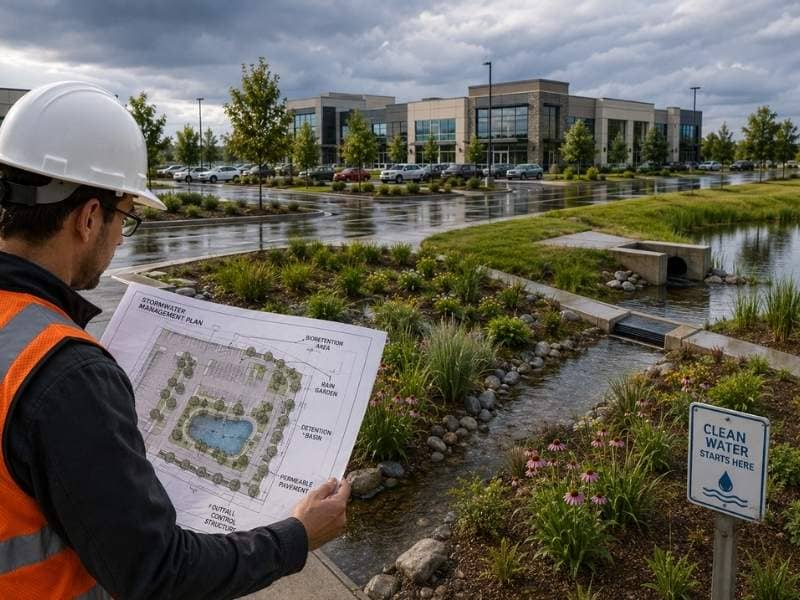
Green tools do a lot of that work:
- Rain gardens that soak up runoff and filter it through plants and soil.
- Permeable pavement that lets water pass through instead of running off.
- Bioswales, which are grassy channels that slow and clean the flow.
- Detention basins that hold storm water and release it at a safe rate.
Each one tackles volume and quality together. Used well, they let a paved site behave a little more like the open land it replaced.
Why Starting Stormwater Design Early Can Save Time
Stormwater design needs space, and that space has to come from somewhere. Ponds, basins and rain gardens all take up room on the site. Plan for them late, and they eat into land you meant to build on.
This is the part teams often miss. A layout drawn without stormwater in mind can leave no good spot for the treatment it needs. Then the whole plan has to shift, and a lot or two can disappear in the process.
Starting early avoids that squeeze. When the design reserves space for water from the first sketch, the buildable area is honest. The numbers hold up, and the team skips a painful round of redrawing once the storm rules come due.
How Good Stormwater Design Helps Protect Property
A stormwater design protects property long after the crews leave. Its job is to keep water moving away from buildings, roads and foundations during every storm. Done right, it quietly prevents the flooding and erosion that wreck a site over time.
The catch is that these systems need care. A basin clogged with leaves or a rain garden choked with silt stops working. Water then backs up where it shouldn’t, and the damage the design was meant to prevent starts to happen anyway.
Good stormwater design plans for that upkeep from the start. It uses features that are easy to reach and clean, and it spells out who keeps them running. A system designed for easy upkeep protects a property for decades, not just its first wet season.
Why Teamwork Is Important in Stormwater Design
Stormwater design works best when the right people agree early. The engineer, the owner and the reviewing agency each have a stake in how water leaves the site. When they sort out the rules up front, the plan moves with far less friction.
Water-quality rules are where this pays off most. An engineer who confirms the local treatment standard early can design to it the first time, instead of guessing and reworking. That one conversation can save weeks of back-and-forth with the agency.
Maintenance is the other piece. Someone has to own these systems for the long haul, often the property owner or a homeowners group. Settling that question during design, not after, keeps the system from falling into neglect once everyone moves on. A team that plans together hands off a stormwater system that actually lasts.
Frequently Asked Questions
What is stormwater design?
Stormwater design is the plan for handling rain that falls on a site. It controls how water moves, how much leaves at once and how clean it is when it goes. The goal is to prevent flooding and keep runoff from polluting nearby water.
Why is stormwater design becoming more important?
Stricter rules now treat runoff as both a flooding risk and a pollution source. More paving across many areas also sends more water off each site during storms. Together, those trends put heavier demands on every plan.
How do roads and buildings affect stormwater design?
Hard surfaces like roofs and pavement can’t soak up rain, so they shed almost all of it at once. That fast runoff carries oil and sediment toward the nearest drain. The design has to slow this water, clean it and store some of it.
Why should stormwater design start early?
Treatment and storage features take up real space on a site. Planning them late can force a redesign and cost buildable land. Starting early reserves room for them and keeps the layout from falling apart.
How does stormwater design help protect property?
A good system steers water away from buildings and foundations during storms. That keeps flooding and erosion from damaging the site over time. Regular upkeep keeps the protection working for years.