Traffic Engineer Demand Extends Beyond Major Retail
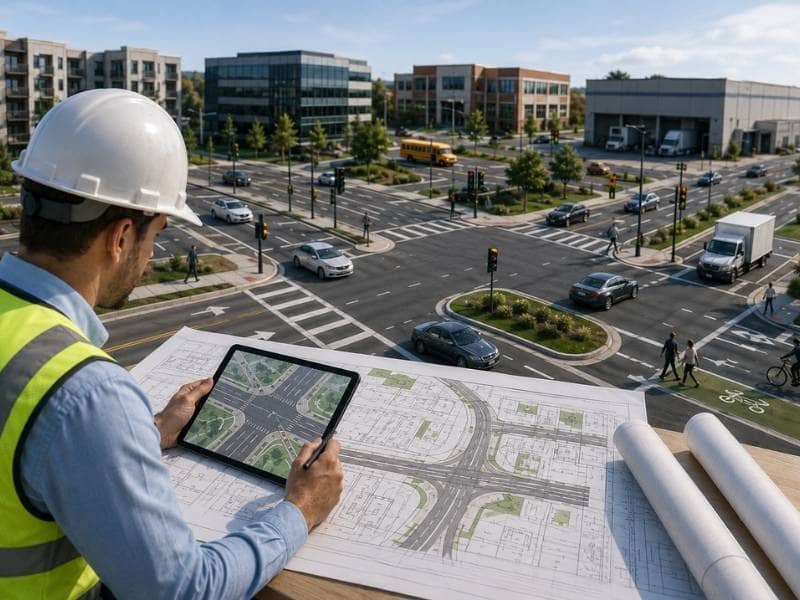
A traffic engineer studies how cars, trucks and people move in and out of a place. For a long time, that work showed up mostly on big retail projects, like malls and shopping centers. Now it reaches far more of them. Housing, offices, schools and warehouses all add cars to the road, so they often need a traffic engineer too. The size of the building matters less than the traffic it creates. That shift is changing who calls one in, and when.
Why More Projects Need a Traffic Engineer
It used to be that only large stores triggered a traffic review. That line has moved. Today, agencies look at how many trips a project will add, not what kind of building it is.
Trips are the key word here. A busy apartment complex can put as many cars on the road as a midsize store. A school sends a rush of traffic twice a day. A warehouse brings trucks that need room to turn and wait. Each one can cross the threshold that calls for a traffic engineer.
This is why the work now spans almost every type of project. A traffic engineer counts the expected trips, then checks whether nearby roads can absorb them. If the answer is shaky, the project may need changes before it can move ahead.
How a Traffic Engineer Helps Create Better Site Access
Getting in and out of a site sounds simple. It rarely is. A traffic engineer plans where a driveway meets the road and how it works once cars start using it.
Placement is the first piece. A driveway set too close to an intersection or a blind curve creates a crash risk. The engineer finds a spot with clear sight lines in both directions. They also size the entrance for the largest vehicles that will use it, from delivery trucks to buses.
Flow comes next. A site that draws heavy traffic may need a turn lane so entering cars don’t block the road behind them. The engineer studies how cars stack up at the driveway during the busiest hour. Good access keeps that flow smooth and safe for everyone, both on the site and on the public road.
Why Early Traffic Planning Can Prevent Delays
Traffic work belongs early in a project, not as a last step. Many agencies require a traffic study before they will approve a site plan. A team that waits until the end can stall right at the finish line.
The road authority adds another reason to start early. Connecting a new driveway to a public road often needs its own permit, with its own review. That process takes time, and it can force changes to the site layout. Better to learn that before the team locks in the rest of the design.
Early traffic planning also shapes the building footprint and parking. If the study calls for a turn lane or a second exit, the site has to make room for it. Finding that out late means redrawing plans the team thought it had finished.
How a Traffic Engineer Helps Improve Road Safety
Safety sits at the center of a traffic engineer’s work. They look at where crashes happen and why, then design to lower the risk. A lot of that work happens at intersections, where paths cross and conflicts pile up.
The engineer studies traffic patterns to spot trouble. A spot with poor sight distance, a confusing turn or a fast approach can all lead to wrecks. Fixes might include a new turn lane, clearer markings or a signal that gives each movement its own time.
People outside cars matter just as much. A traffic engineer plans safe crossings for walkers and clear space for cyclists. They look for places where a person on foot has to cross several lanes at once, then work to make that crossing shorter and safer. The goal is roads that work for everyone who uses them.
Why Demand for Traffic Engineer Services Is Growing
Demand for traffic engineers keeps climbing, and a few forces are behind it. More agencies now require a traffic study for a wider range of projects. What once applied only to large sites now reaches small ones that add real traffic.
Safety goals push the trend further. Many communities have set targets to cut serious crashes, and they lean on traffic engineers to meet them. Crossings, signals and intersection designs all get a closer look than they did before.
The way people travel is changing too. Towns now want streets that work for walking and biking, not just driving. Planning for all of those users takes skill that a traffic engineer brings. As development spreads into busier areas, that skill becomes harder to do without.
Frequently Asked Questions
What does a traffic engineer do?
A traffic engineer studies how vehicles and people move through an area and designs roads to handle that movement safely. The work covers site entrances, turn lanes, signals and intersection layouts. The goal is traffic that flows well and keeps everyone safe.
What types of projects need a traffic engineer?
Far more than just retail centers. Apartments, offices, schools and warehouses can all generate enough traffic to require one. What matters is the number of trips a project adds, not the kind of building it is.
Why should a traffic engineer be involved early?
Many agencies require a traffic study before they approve a site plan, so early work keeps the project from stalling. A new road connection may also need its own permit, which takes time. Starting early lets the findings shape the layout before the team locks it.
How does a traffic engineer help with safety?
They study where and why crashes happen, then design to remove the cause. That can mean better sight lines, clearer markings or a smarter signal. They also plan safe crossings for people who walk and bike.
Can smaller projects need a traffic engineer?
Yes. A small project on a busy road can still add enough traffic to warrant a review. Agencies base the call on expected trips, so even a modest building may trigger one.