
Construction Plans Are Growing More Interconnected
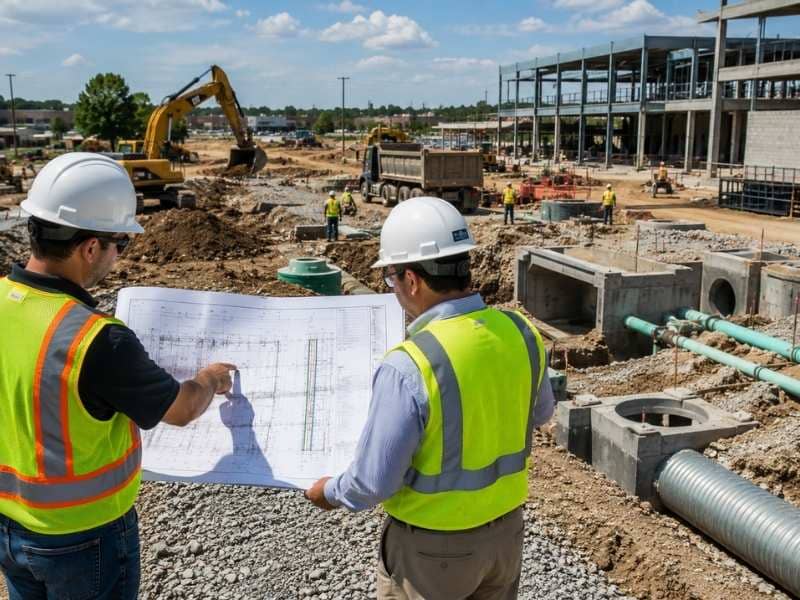
Construction plans are the detailed drawings a crew builds from. A project used to lean on just a few of them. Now a single job can carry dozens, and they all have to agree with one another. The site drawings, the utility sheets, the structural pages and more form one connected set. Change one, and the others have to keep up. That tight link is what makes a modern plan set so powerful, and so easy to get wrong.
Why Construction Plans Need More Teamwork Than Before
A plan set is really one book that many hands write. The civil engineer draws the site work. A structural engineer handles the building frame. Others cover plumbing, power and grading. Each works on separate sheets, yet all of those sheets describe the same project.
That shared document is what forces teamwork. A pipe on the utility sheet runs under a footing on the structural sheet. A driveway on the site plan ties into a grade on another page. None of these pieces stands alone. If two sheets disagree, the crew in the field has to stop and ask which one is right.
So the team can’t just hand in their parts and walk away. They have to fit those parts together into one set that tells a single, clear story. The plan set is the place where every discipline has to meet.
How Utility Systems Shape Construction Plans
Utilities thread through almost every sheet in the set. Water, sewer and power lines all have to share space with footings, roads and grading. That makes the utility pages some of the hardest to line up with the rest.
The trouble is that a utility line shown on one sheet has to match its depth and path on every other sheet that references it. A sewer pipe drawn at one elevation on the utility plan can’t sit at a different depth on the grading plan. When those numbers don’t match, the set contradicts itself, and a reviewer or a crew will catch it.
This is why reviewers check the utility sheets against the others so closely. They touch the building, the site and the roads all at once. Getting them to agree across the whole set takes careful, deliberate coordination.
Why One Change Can Affect Many Construction Plans
In a connected plan set, no change stays in one place. Move a building a few feet, and the site plan, the utility sheet and the grading plan all need an update. A change that looks small on one page can ripple across a dozen others.
The reason is all the cross-references. Sheets point to each other constantly. A detail on one page calls out a dimension shown on another. Shift that dimension and forget the detail, and now two sheets tell different stories. That leaves the crew guessing which to trust.
This is the hidden cost of a late change. It is rarely just one fix. It is a chain of fixes that all have to land together. Miss one link in that chain, and the whole set falls out of step.
How Technology Makes Construction Plans Easier to Manage
Modern tools shine at keeping a big plan set in order. They store every sheet in one shared place, so the whole team works from the same current version. No one wastes a day building off an outdated page.
Version control is the quiet hero here. When someone updates a sheet, the system marks it, tracks what changed and shows who changed it. The old copy doesn’t vanish into an inbox somewhere. Everyone can see which version is the latest and trust that it is.
These tools also tie cross-references together. Change a dimension in one spot, and the software can flag every sheet that points to it. That turns a manual hunt through dozens of pages into a quick, guided check. The set stays consistent with far less effort.
Why Good Communication Leads to Better Construction Plans
A plan set isn’t finished when construction starts. Questions come up in the field, and how the team handles them shapes the final result. Good communication keeps the plans and the actual build in step.
The main tool here is a simple loop. When a crew hits something the plans don’t cover, they send a written question to the design team. The engineer answers, and the team logs that answer against the set. Now everyone shares the same updated information, instead of a fix that lives only in one person’s memory.
Skip that loop, and small gaps turn into big ones. One crew solves a problem its own way while another never hears about it. Clear, written communication keeps the whole team building from the same plans. It is what holds a connected set together once the work is underway.
Frequently Asked Questions
What are construction plans?
Construction plans are the drawings and details a crew uses to build a project. They cover the site, the utilities, the structure and more across many sheets. Together, they show exactly what to build and where.
Why are construction plans more connected today?
Projects now pack many systems into the same space, so their drawings depend on each other. A line on one sheet often ties directly to a feature on another. That web of links means the sheets all have to agree.
How do utility systems affect construction plans?
Water, sewer and power lines run through nearly every part of a project. Their paths and depths have to match across the site, grading and structural sheets. When those numbers line up, the set stays consistent and the work goes smoothly.
How does technology help with construction plans?
Digital tools keep every sheet in one shared place, so the team always works from the current version. They track each change and show who made it. They can also point out which sheets a single edit affects.
Why is communication important when working on construction plans?
Field questions come up that the drawings don’t fully answer. A clear process for asking and recording those answers keeps everyone on the same page. Without it, one crew’s fix can get lost before the rest of the team learns about it.