Traffic Engineer Planning Near Bypass Projects
A new bypass rearranges the map. Roads that carried steady traffic for years suddenly go quiet. Quiet roads pick up traffic no one planned for, and properties along those roads wake up to a whole new scene at the driveway. A traffic engineer evaluates how new road projects affect property access, turning movements, and future traffic patterns before construction begins through transportation planning. The numbers a property counted on before the project may not hold. Owners who plan around the change tend to come out ahead. Owners who assume things stay the same usually do not.
Evaluating Access Changes Created by New Road Projects
Big road work reshapes access in ways that catch owners off guard. A new median removes a left turn a business relied on for years. A raised curb wipes out a second driveway. Land gets taken for the road, and an entrance that fit fine before now sits too close to a new intersection.
An engineer reads the project plans early and traces those effects onto the property. Through transportation planning, the engineer evaluates which turns stay, which ones go, and what the site needs to work once the new layout opens.
Planning Safe Property Access During Roadway Expansion
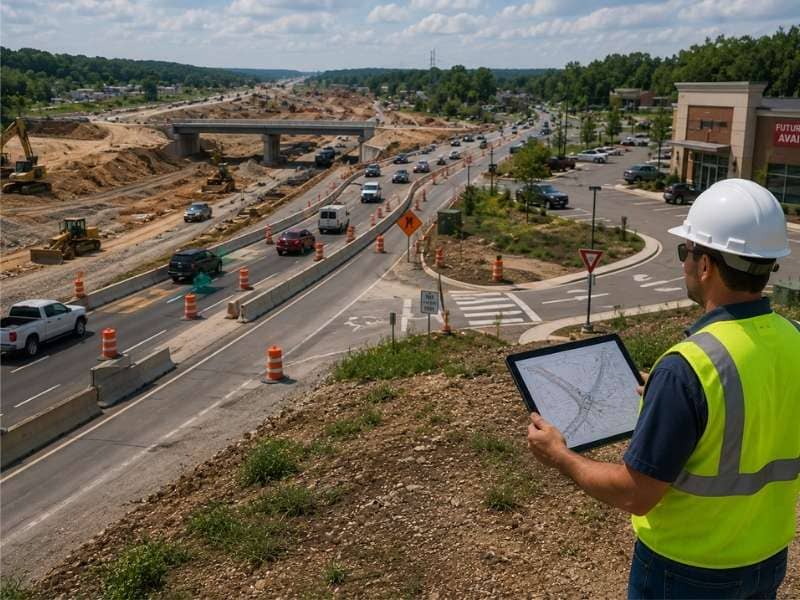
Construction makes a strange world of its own, and it can last for years. Lanes shift. Detours reroute normal traffic. Access to a property may run through a gravel path or a narrow opening for months at a time. Customers and delivery drivers make choices based on how hard all of that feels.
Engineers plan for that time instead of waiting it out. Temporary paths need enough width and clear sight lines to stay safe as things change. Traffic inside the site may need reworking so cars do not stack up at a tight entrance. Checking the road contractor’s schedule shows when access will be worst. That lets an owner get ready instead of react. Sites that stay easy to reach keep their business. Sites that turn into a hassle lose customers who do not always come back once the road opens.
Anticipating Future Traffic Demand Around Growth Corridors
Bypasses draw development, and development draws traffic. Land that sat idle for thirty years turns attractive the moment a new interchange opens nearby. And the road that feels fine during construction can fill up within a few years of the finish.
Traffic engineers build that in from the start. They use area growth plans and approved projects to guess what the road will carry later. Designing an entrance for the road’s future, not just today, avoids a nasty surprise. Otherwise a driveway approved this year fails three years from now. Turn lane length, driveway spacing, and inside queuing all need that longer view. Fixing them later means rebuilding under live traffic.
Coordinating Site Development With Transportation Improvements
Private building and public road work run on separate clocks, and the two rarely line up on their own. A site that opens before the road finishes may need a temporary entrance and then a permanent one. A site that waits may sit idle a year longer than the owner planned.
Coordination helps both sides. Sharing plans early lets the road designer plan for the driveway. It lets the site designer match grades at the new pavement edge. It also settles who builds what, since the entrance often falls in a gray zone between the two projects. Timing matters most of all. Permits for work in the road area move slowly while a road project is active. An owner who applies late waits behind everyone else.
Supporting Development Approvals With Traffic Engineering Analysis
Agencies reviewing a project near active road work face a harder question than usual. They are judging a site against conditions that do not fully exist yet. A traffic study that models the road after the project opens gives them something solid to work from.
That study usually shows how much traffic the project makes. It shows how that traffic spreads across the changed roads. It shows what the key intersections do under future volumes. And it shows what the site needs at its entrance to keep things running. Reviewers lean on that work because they must protect a road the public just paid for. Applicants who show up with strong numbers get approved. Applicants who show up with guesses get conditions attached, or get sent back to do the study anyway.
Frequently Asked Questions
When should a traffic engineer become involved in a project near a bypass?
As soon as the road plans go public. Access choices get locked into a road design fairly early. And once construction starts, changing an entrance spot gets hard and costly. Early help leaves time to shape the design, or to plan the site around what the design already sets.
How does a traffic engineer improve access planning?
By working from the road outward, not the building outward. The engineer looks at what the road will be like once construction ends. They see which turns the design allows and where an entrance can safely go. Then they shape the site to fit those limits instead of fighting them.
Can traffic engineering help reduce future congestion around new developments?
It can, though it works best used across a whole area. Well-spaced driveways, turn lanes that pull slowing cars out of the through lane, and inside layouts that keep lines off the road each cut the friction a project adds. The effect grows when a whole corridor follows those rules. It fades when only one site does.