Roadway Design Coordination Before Utility Delays
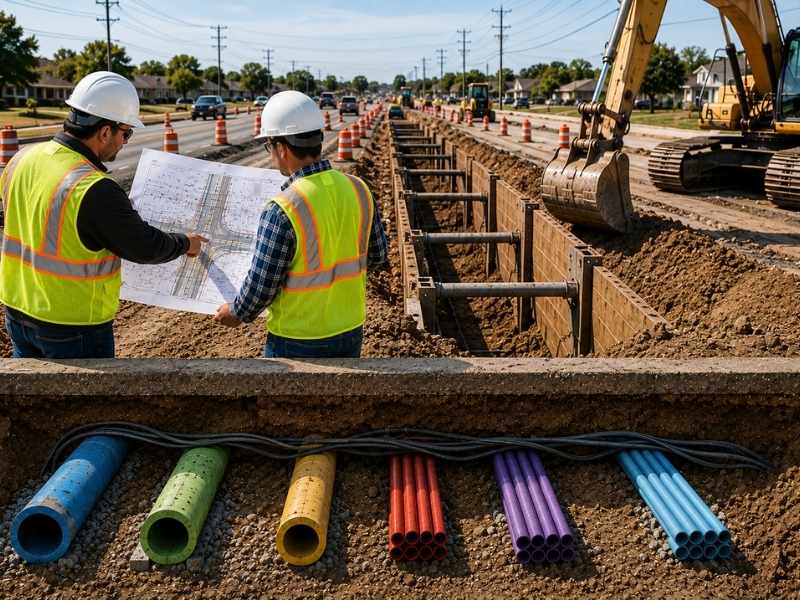
The most expensive surprises in road construction sit a few feet under the pavement. Water mains, sewer lines, gas pipes, power cables and fiber all share the ground where new roads go. Roadway design that ignores them tends to find them at the worst possible time. A project can lose months waiting on a single relocation that nobody planned for. Coordinating the design with the utilities early costs a little attention up front. It can save entire seasons of construction time later.
Why Utilities Should Be Checked Early
Road corridors are crowded places. Decades of development stack water, sewer, gas, electric, telephone and internet lines into the same narrow strip of ground. The records that describe them range from excellent to decades out of date. Some lines sit exactly where the old drawings say. Others wander several feet off, sit shallower than expected or don’t appear in any record at all.
That uncertainty is why the checking has to happen early. When designers learn about a line during the design phase, they can adjust the plans around it in an afternoon. When a contractor discovers the same line with an excavator, the project stops while everyone figures out what it is, who owns it and what happens next. Utility relocations also carry long lead times, often months. A conflict found late can idle an entire project while one company schedules one crew.
Finding Utility Problems Before Construction
Engineers hunt for conflicts by laying the proposed design over the known utility locations and looking for trouble. A new storm drain drawn at the same depth as an existing gas main is a conflict. So is a widened lane that puts heavy pavement over a shallow water line, a signal pole foundation that lands on a duct bank or a deepened ditch that would expose buried cable.
Each conflict found on paper gets a cheap fix. The designer can shift an alignment a few feet, change a pipe’s depth or flag the line for relocation while there’s still time to arrange one. Where records look unreliable, crews can locate and expose specific lines in the field to confirm exact depths before the design locks. Every conflict resolved at a desk is one that never stops an excavator.
Planning Road and Drainage Work Together
Drainage work causes more utility conflicts than the road itself. Pavement mostly rides on the surface, but storm pipes, culverts, inlets and regraded ditches occupy the same underground space where utilities live. A storm sewer trench can cross every line in the corridor on its way downhill. A ditch cut two feet deeper can shave the cover off a gas main that was safe the day before.
The fix is to design the road profile, the drainage system and the utility layout as one exercise instead of three. When the team places inlets and culvert crossings with the utility map open, most conflicts never make it into the plans. The alternative, designing drainage in isolation and patching conflicts afterward, produces the exact late-stage surprises this coordination exists to prevent.
Working With Utility Companies
Utility owners need time, and the only way to give them time is to involve them early. Most companies will review preliminary plans, mark up concerns and identify which of their lines a project affects. But their engineering and relocation crews carry backlogs of their own. A relocation requested during design fits into their schedule. A relocation requested mid-construction goes to the back of the line.
Regular coordination pays off in specifics. Early meetings settle which lines must move, which can stay protected in place and who handles each piece of the work. They also let relocations happen in the right order before the road contractor arrives, so the corridor is clear when the heavy work starts. A project that skips these conversations ends up negotiating them later, under deadline pressure, with crews standing by.
Avoiding Delays During Road Work
Good coordination shows up on site as a quiet schedule. Crews dig where the plans say to dig and find what the plans say they’ll find. Nobody stands around billing standby time while a gas company works a rushed relocation into its calendar. The change orders that usually follow late utility discoveries never get written.
Safety improves along with the schedule. A struck gas or electric line endangers workers and the public, and most strikes trace back to a line nobody verified. The same early checks that protect the timeline protect the people doing the work. Fewer surprises also mean shorter closures and detours, which the driving public notices even if they never learn why the project ran smoothly.
Frequently Asked Questions
Why are utilities important in roadway design?
Buried and overhead lines occupy the same corridor as the new road, and their locations limit where crews can dig, grade and build. Designing around them keeps the project legal, safe and on schedule.
What is a utility conflict in roadway design?
A utility conflict is any spot where planned work sits too close to an existing line, such as a storm pipe crossing a gas main or new pavement loading a shallow water line. Designers resolve each one by adjusting the design or relocating the line.
When should utilities be checked for a road project?
During early design, before the alignment and drainage layout lock in. At that stage a conflict costs a drawing revision, while the same conflict found during construction can cost months.
Can utility issues delay road work?
Yes, and they rank among the most common causes. A line discovered mid-project forces crews to stop, wait for the owner to relocate it and often resequence the remaining work, with standby costs running the whole time.
Who pays to move utility lines for a road project?
It depends on where the line sits. Utilities occupying public right-of-way under a franchise agreement often relocate at their own expense, while lines on private easements usually move at the project’s cost. Sorting this out early prevents billing disputes later.